Iga Swiatek Says Women’s Tennis Doesn’t Need a “Battle of the Sexes”

Wimbledon champion Iga Swiatek contends that women’s tennis has enough strength to stand out on its own. Recently, in discussing the widely discussed “Battle of the Sexes” match between Nick Kyrgios and Aryna Sabalenka, Swiatek expressed the view that such events are no longer essential.
The Polish athlete articulated that contemporary women’s sports possess their own icons, narratives, and influence. According to her, tennis no longer requires validation through direct comparison between males and women.
The Recent “Battle of the Sexes” Match
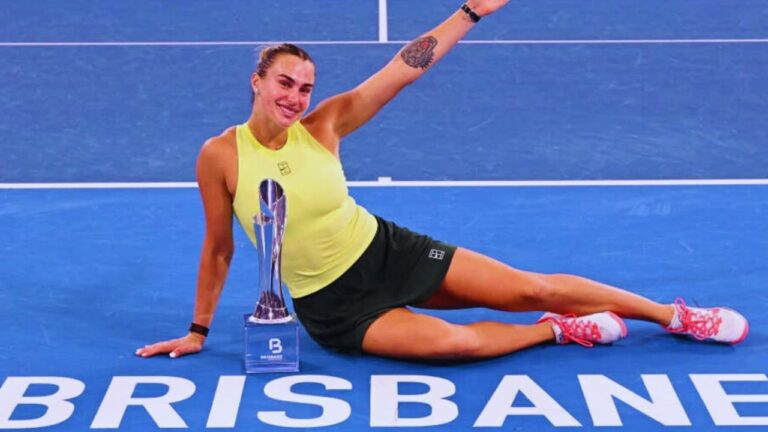
Last week, tennis enthusiasts worldwide were abuzz regarding a significant match held in Dubai. It was not part of a substantial tournament—it was an exhibition known as the “Battle of the Sexes.” The event showcased women’s world number one Aryna Sabalenka competing against Australia’s Nick Kyrgios, a skilled yet frequently controversial player in men’s tennis.
The match was conducted on a modified court designed to equalize the abilities of both competitors. Kyrgios ultimately secured victory in consecutive sets, but most of the discussion centered not on the score but on the significance of the event. While some regarded it as entertaining, others questioned whether this type of confrontation remains appropriate in the contemporary game.
Swiatek is categorized within the second group. For her, women’s tennis no longer needs to “fight for respect.”
Swiatek’s Candid Perspective
Swiatek articulated her remarks with clarity and conviction. “I have not viewed it because I do not typically watch such content,” she stated. From her perspective, the 2023 event prioritized entertainment and publicity over substantive advancements in sports equality. It garnered attention, she acknowledged, but I would not suggest it was related to social change or any significant issues.
She reminded everyone of the significant progress tennis has made since the inaugural “Battle of the Sexes” in 1973. That renowned match between Billie Jean King and Bobby Riggs represented a pivotal moment for women’s sports. It described the struggle for equal rights, equitable compensation, and recognition for female athletes.
However, Swiatek states that the situation has changed significantly. “Women’s tennis is self-sufficient,” she said with pride. We possess outstanding athletes and compelling narratives. We do not need to compare ourselves to men’s tennis.
A New Era of Assurance
Swiatek’s remarks demonstrate the significant confidence possessed by this emerging generation of female athletes. The women’s tour today features prominent stars who inspire supporters worldwide, including Sabalenka, Coco Gauff, Naomi Osaka, and Elena Rybakina. These athletes attract large audiences, secure unprecedented contract terms, and have millions of followers on social media.
For young enthusiasts, these women demonstrate that tennis is a sport driven by talent and passion, not by gender. Many sports commentators concur that women’s matches often display greater diversity and emotional complexity than men’s predominantly power-oriented games. Swiatek’s assertion that “there doesn’t need to be any competition” between the sexes underscores that success in tennis is derived not from comparison but from genuine brilliance on the court.
An Improved Approach to Celebrating Tennis Collectively
Rather than playing exhibition matches, Swiatek proposes focusing on events where men and women compete together as teammates. That is why she is an avid supporter of the United Cup, a new mixed-team tennis tournament that began in Australia.
In the United Cup, participating nations face each other in ties comprising a men’s singles match, a women’s singles match, and a mixed doubles match. In this manner, male and female athletes collaborate harmoniously on behalf of their nation, emphasizing solidarity over gender-based rivalry.
“Events such as this serve to unify the tennis community,” Swiatek stated. Fans of the WTA and ATP can enjoy watching with enthusiasm. She also expressed her appreciation for observing individual talents collaborating in mixed doubles—an uncommon occurrence in most tournaments. For her, this is what enhances the appeal and quality of our sport.
The Essence of the Original Contest
When Billie Jean King defeated Bobby Riggs in 1973, it was not merely a competition — it was a statement. King demonstrated that women are capable of competing at the highest levels and merit equal respect. Her triumph transformed sports culture and facilitated greater opportunities for women worldwide.
Swiatek’s perspective does not diminish that legacy. Instead, it acknowledges it by demonstrating the remarkable success of King’s mission. The absence of a “Battle of the Sexes” in women’s tennis indicates that gender equality has been firmly established.
Today, women’s tennis receives extensive recognition, equitable prize money at major tournaments, and a worldwide fan following. Swiatek and other athletes are carrying forward the legacy established by pioneers such as King—by excelling as distinguished competitors and prominent public figures in their own right.
Swiatek’s Leadership Both on and off the Court
At 24, Iga Swiatek has already secured four Grand Slam titles and is regarded as one of the most esteemed figures in tennis. Renowned for her composed demeanor and considerate nature, she frequently discusses mental health, integrity, and sportsmanship.
Her statement regarding this matter aligns with that broader reputation. Swiatek shows no interest in sensational headlines or theatrics. She believes that progress in sports comes from support, collaboration, and mutual respect—rather than from rekindling past rivalries.
Numerous coaches and former athletes have commended her for her resolute stance. “Iga demonstrates wisdom that surpasses her years,” remarked one commentator. She recognizes that women’s tennis has developed its own compelling narrative.
The Emergence of Tennis as a Team Sport
Events such as the United Cup demonstrate that tennis — traditionally regarded as an individual sport — can also excel through collaborative effort. Participants have the opportunity to share the court with their compatriots, support one another, and participate in matches that integrate skills and strategies from both men’s and women’s divisions.
Even enthusiasts appreciate this novel vitality. Observing a leading male and female player collaborate against another mixed pair introduces an element of novelty and unpredictability. Instances of amusement, tension, and collaboration establish novel connections between audiences and players.
That is the type of collective mentality that Swiatek endorses. She believes it fosters the development of tennis while maintaining equality at its core.
Social Media Presence and Financial Assets
Like numerous contemporary athletes, Swiatek maintains a prominent presence on social media. She engages with her audience via platforms including Instagram, X (formerly Twitter), and TikTok. She frequently shares training videos, behind-the-scenes footage, and sincere messages for her supporters.
Swiatek’s approach to social media is optimistic and well-balanced. She does not depend on extravagant posts — she emphasizes sincerity and appreciation. Her compassion and integrity make her relatable, particularly to young admirers who regard her both as a role model and as an individual.
Regarding her personal worth, Swiatek is already positioned among the highest-earning female athletes globally. Her tournament earnings alone surpass several million dollars, and she maintains prominent endorsement agreements with international brands such as Nike and PZU, a Polish insurance firm. Her achievements demonstrate the increasing significance of women’s tennis, both in athletic competition and in the business sector.
Future Perspectives
As tennis progresses, Swiatek’s remarks serve as a reminder that equality does not require validation through confrontations. It is already an integral aspect of the sport’s identity. For young women watching from the stands or at home, seeing players like Swiatek and Sabalenka excel on the international stage conveys a more powerful message than any exhibition match ever could.
The future of tennis appears more promising when players support one another rather than compete across gender boundaries. That sense of unity precisely reflects Swiatek’s principles. As she stated, “It is not necessarily required to compare ourselves to men’s tennis.” Honestly, there is no necessity for any competition.
And with champions such as her paving the way, women’s tennis appears poised to continue shining—confidently and autonomously.