Can Carlos Alcaraz Shine Without His Coach? A New Tennis Season Begins With Big Changes

Can Carlos Alcaraz Shine Without His Coach? A New Tennis Season Begins With Big Changes
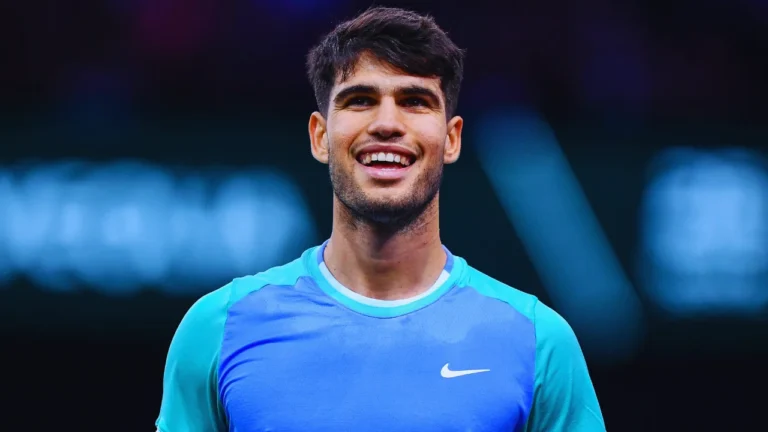
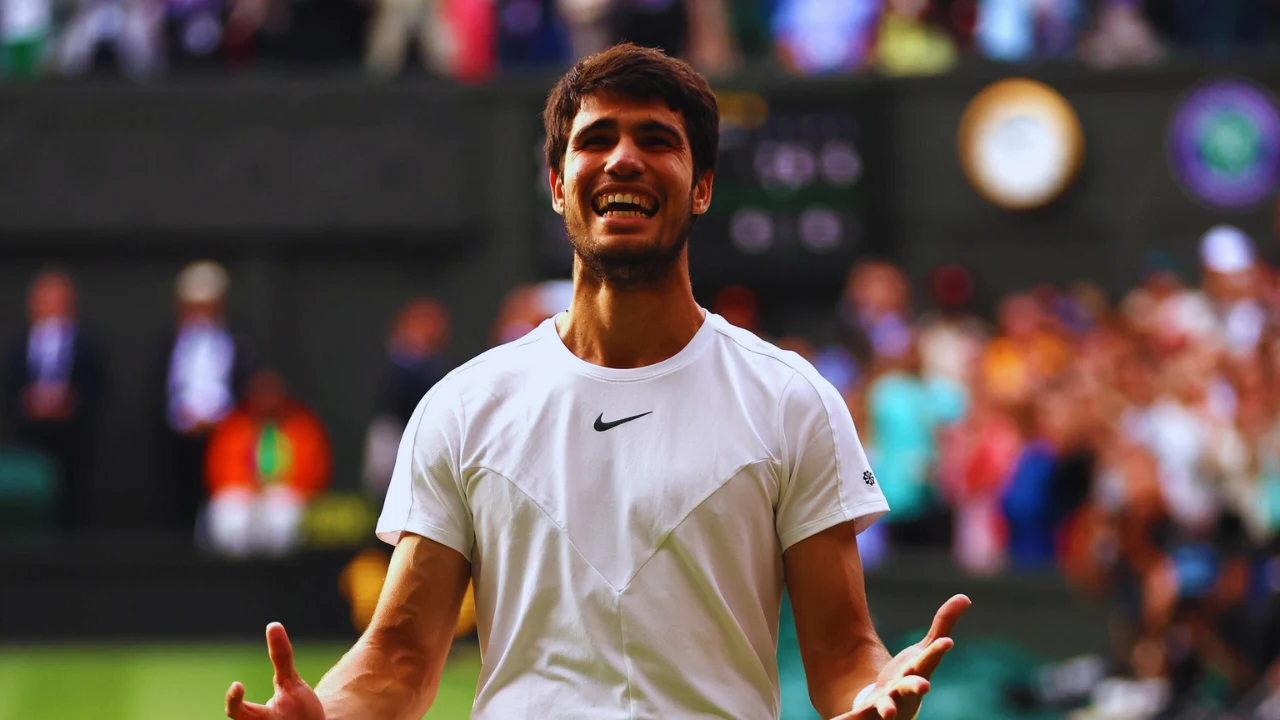
Carlos Alcaraz begins the new tennis season with a significant change — he is no longer working with his longtime coach, Juan Carlos Ferrero. The two individuals were together for seven years and established one of the most formidable partnerships in tennis. Ferrero contributed to Alcaraz’s development from a talented adolescent into a global champion. Now, as the 22-year-old Spaniard prepares for the 2026 Australian Open, spectators are questioning whether he can continue to achieve victories without Ferrero’s presence.
On social media, Alcaraz shared joyful year-end photographs with family and friends, but did not include any with his former coach. That subtle yet significant detail further stimulated discussion among admirers. News correspondents hurried to his birthplace in Spain to ascertain the actual circumstances. Ferrero subsequently addressed media outlets to present his account of the events. Some believe that Alcaraz erred in allowing him to depart. Others think it demonstrates maturity—that he desires to assume entire responsibility for his career.
Renewed Rivalry: Alcaraz versus Sinner
This season, Alcaraz’s most significant challenge will be confronting his former rival, Jannik Sinner. The Italian player, only a year his senior, has emerged as Alcaraz’s most formidable opponent. The two have engaged in exhilarating contests, frequently challenging each other to the utmost. In 2025, they were the leading figures in men’s tennis, collectively securing all the major titles.
Sinner, the reigning two-time Australian Open champion, also has significant aspirations. He aims to secure victory at the French Open this year to achieve a career Grand Slam—an accomplishment attained by very few players in history. Alcaraz seeks to achieve the same record. Both gentlemen are swift, courageous, and a pleasure to observe. Their competition has the potential to characterize this entire generation of tennis players.
A Quiet Return to Form for Sinner
Sinner faced significant media scrutiny after a failed substance test in 2024, resulting in a brief suspension. Many believed that this would hinder his progress. Instead, he returned in 2025 with greater strength, securing titles and garnering respect for his perseverance.
Now, he approaches 2026 with diminished external distractions and greater concentration than ever before. This could render him even more formidable against Alcaraz and the remaining competitors.
The Challenge Confronting Others
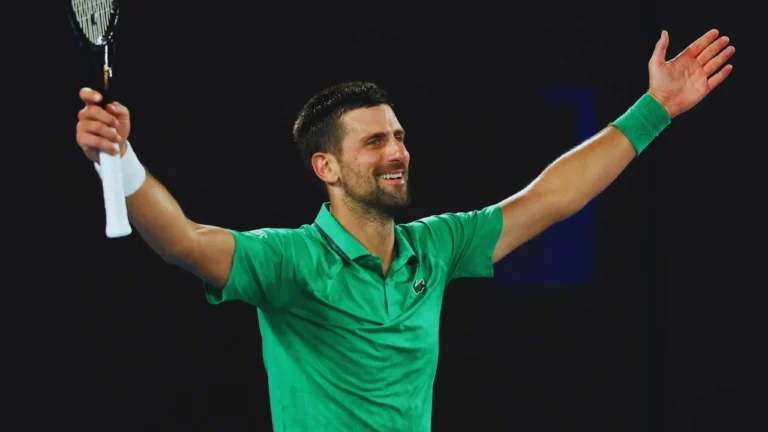
Apart from Alcaraz and Sinner, the remaining players on the men’s tour appear to be somewhat lagging. Novak Djokovic, still a prominent figure in the sport at 38, advanced to the semifinals of all four Grand Slam tournaments last year but was unable to maintain his momentum in extended five-set matches. His body, following years of competition, no longer recovers in the same manner. However, he does not intend to resign. Djokovic states his intention to compete until at least the 2028 Olympic Games.
Other leading competitors—such as Alexander Zverev, Félix Auger-Aliassime, Alex de Minaur, Lorenzo Musetti, Taylor Fritz, and Ben Shelton—are exerting significant effort to close the gap. Currently, tennis is dominated by two leading figures: Carlos Alcaraz and Jannik Sinner.
The Women’s Sport: Influence and Challenges
On the women’s side, tennis remains compelling — albeit somewhat less predictable. Two players dominate the field: Aryna Sabalenka and Iga Swiatek. Both experienced an outstanding 2025 season, motivating each other to achieve new levels of excellence.
Sabalenka became the year-end world No. 1, having reached nine finals. Nonetheless, she was defeated in five of those matches—frequently experiencing difficulty with anxiety when the pressure intensified. To be recognized among the all-time greats, she must convert those close victories into championships.
Swiatek, in the meantime, demonstrated her invincibility on grass by securing the Wimbledon title — a victory she previously believed was beyond her grasp. Now she is pursuing her own career Grand Slam at the Australian Open. At only 24 years of age, she has already established herself as one of the most versatile athletes in the sport.
Emerging New Stars
Behind Sabalenka and Swiatek, numerous emerging young women are poised to make their breakthrough. Amanda Anisimova advanced to the finals of Wimbledon and the US Open last year, demonstrating her ability to compete with the best. Elena Rybakina, the 2025 WTA Finals champion, appears prepared to excel once more following her victory at Wimbledon in 2022.
And subsequently, there is Coco Gauff. Her decisive victory at the French Open demonstrated her resilience and mental fortitude. She has been collaborating with a biomechanics instructor to address her serve, which constitutes her most significant weakness. At only 21 years old, Gauff demonstrates intelligence, confidence, and ongoing development. Mirra Andreeva, at just 18, remains an emerging talent to watch. Although her momentum diminished toward the end of 2025, her talent remains evident.
Off the Court: Conflicts and Challenges
While competitors gear up for the match on the court, numerous activities are taking place behind the scenes. The Professional Tennis Players Association (PTPA), an organization established to safeguard players’ rights, is currently engaged in a legal dispute with the governing bodies of tennis. They seek to allocate a larger share of revenue from major tournaments to players. A new agreement in Australia could potentially address some of these concerns.
Meanwhile, in England, the All England Club — the venue of Wimbledon — is experiencing delays in its plans to expand the tournament facilities. Local legal matters and environmental regulations are causing delays. Tennis, similar to other major sports, must navigate political and commercial issues beyond the playing field.
Social Media Presence and Persona
Carlos Alcaraz is not merely a tennis sensation — he is also a prominent figure on social media. On Instagram, millions of admirers follow his life beyond tennis. His posts depict heartfelt family moments, humorous exchanges with friends, and even haircuts that set trends among admirers. What is not visible now is his former coach, Ferrero, demonstrating that some chapters truly come to a definitive end.
He appears modest and cheerful, frequently expressing gratitude to admirers and engaging in humorous remarks online. His radiant smile and optimistic demeanor set him apart from previous champions who were known for their seriousness or moodiness. Brands value that image, and it has contributed to elevating his prominence well beyond the realm of the court.
Net Worth and Income
At 22, Alcaraz is already among the wealthiest young athletes globally. His income derives not only from tennis prize money—which exceeded tens of millions in 2025—but also from endorsement deals. He collaborates with leading brands in sportswear, timepieces, and automobiles, and is frequently featured in international advertising campaigns.
Should Alcaraz continue to win Grand Slam titles and enhance his reputation, his net worth may increase significantly. Experts already regard him as an international emblem of tennis, akin to Roger Federer, Rafael Nadal, and Djokovic before him.
What Lies Ahead for Alcaraz?
The conclusion of Alcaraz’s partnership with Ferrero may seem dramatic at present, but history shows that top players often experience such transitions. Federer parted ways with his coaches before achieving new levels of success. Serena Williams also did. Occasionally, independence serves as the catalyst that transforms potential into excellence.
For Alcaraz, the challenge is equally mental and physical. He must harmonize independence with concentration and continue to enhance his abilities even in the absence of his mentor. If he succeeds, his story could inspire young athletes worldwide—that growth often entails independence.
Pressure and Opportunity
The upcoming Australian Open will be the first significant challenge. The warmth, the bustling throngs, and the luminous displays of Melbourne will unveil much. Will Alcaraz’s new trajectory lead to triumph—or inevitable challenges? Will Sinner sustain his winning streak, or will an unexpected contender emerge to astonish everyone?
Tennis is a sport that is constantly evolving and never remains static for extended periods. Although veteran players such as Djokovic continue to compete, the transfer of prominence is occurring rapidly. With emerging rivalries, renewed energy, and compelling narratives beyond the court, 2026 is poised to be a remarkable year for the sport.
A New Era in Tennis
As the new season commences, one thing remains certain — tennis enthusiasts are poised to enjoy a remarkable experience. Carlos Alcaraz finds himself at a pivotal juncture: solitary, self-assured, and bearing the aspirations of an emerging generation. Jannik Sinner stands on the opposite side of the net, prepared to challenge him more intensely than ever before. And in the women’s competition, Sabalenka, Swiatek, and others expect to play competitive matches of their own.
Change can be intimidating, yet it also generates enthusiasm. Alcaraz’s chapter without Ferrero may signify the outset of something even greater. The world will be observing—and applauding—as this young champion proceeds to write the next chapter of his journey.