Novak Djokovic: The Human Champion Behind the Tennis Legend

Novak Djokovic: The Human Champion Behind the Tennis Legend
Novak Djokovic is regarded as one of the most distinguished tennis players in history. With over 20 Grand Slam titles, he is frequently commended for his skill, concentration, and resilience. However, beneath the trophies and applauding audiences, there is a deeply human side of Djokovic that remains largely unseen by most.
Those who know him personally, such as his longtime companion and mentor, Pepe Imaz, describe him as compassionate and inquisitive—someone who consistently seeks to acquire knowledge and grow. He is not merely a champion on the court, but an individual who acknowledges his imperfections, continually seeks self-improvement, and motivates millions through his narrative of resilience and determination.
The Architect of the Champion
Novak Djokovic’s achievements have never solely depended on speed, physical conditioning, or ball control. Many tennis authorities agree that tennis is primarily a mental discipline. Pepe Imaz once stated that “the mental aspect accounts for at least 70% of the sport,” and Novak recognized this fact more than anyone.
He dedicates equal effort to cultivating his mind as he does to strengthening his body. Even following prolonged and arduous contests, he remains inquisitive and receptive. His regard for others, even when under pressure, is what distinguishes him. Djokovic maintains that self-awareness—comprehending his emotions, thoughts, and reactions—is essential to his excellence.
He does not avoid difficult situations. Instead, he scrutinizes them, gains insights from them, and advances with greater strength than previously.
Revisiting Tennis Through the Lens of Novak
A single fan, who was raised watching Roger Federer, found renewed significance in tennis through Novak Djokovic. As a child, Federer appeared exemplary—composed, distinguished, and nearly superhuman. Tennis seemed to be a demonstration of excellence.
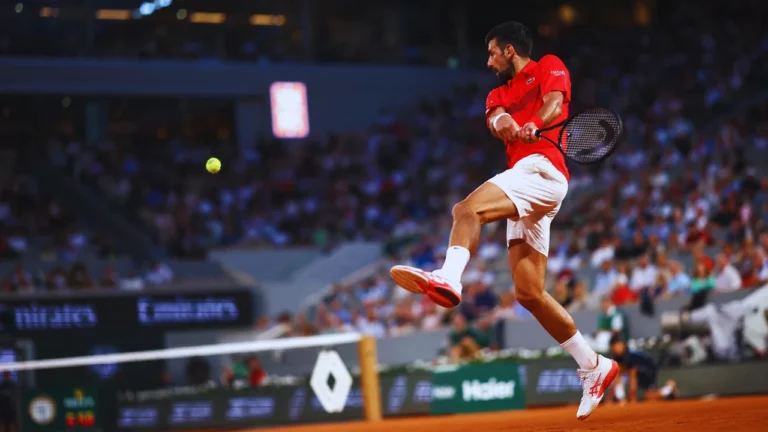
However, several years later, during the closure, that individual rediscovered tennis. Life had become unpredictable. There were errors, stress, and instances of self-doubt. Then came Djokovic’s performance at the 2021 French Open—a remarkable display of perseverance.
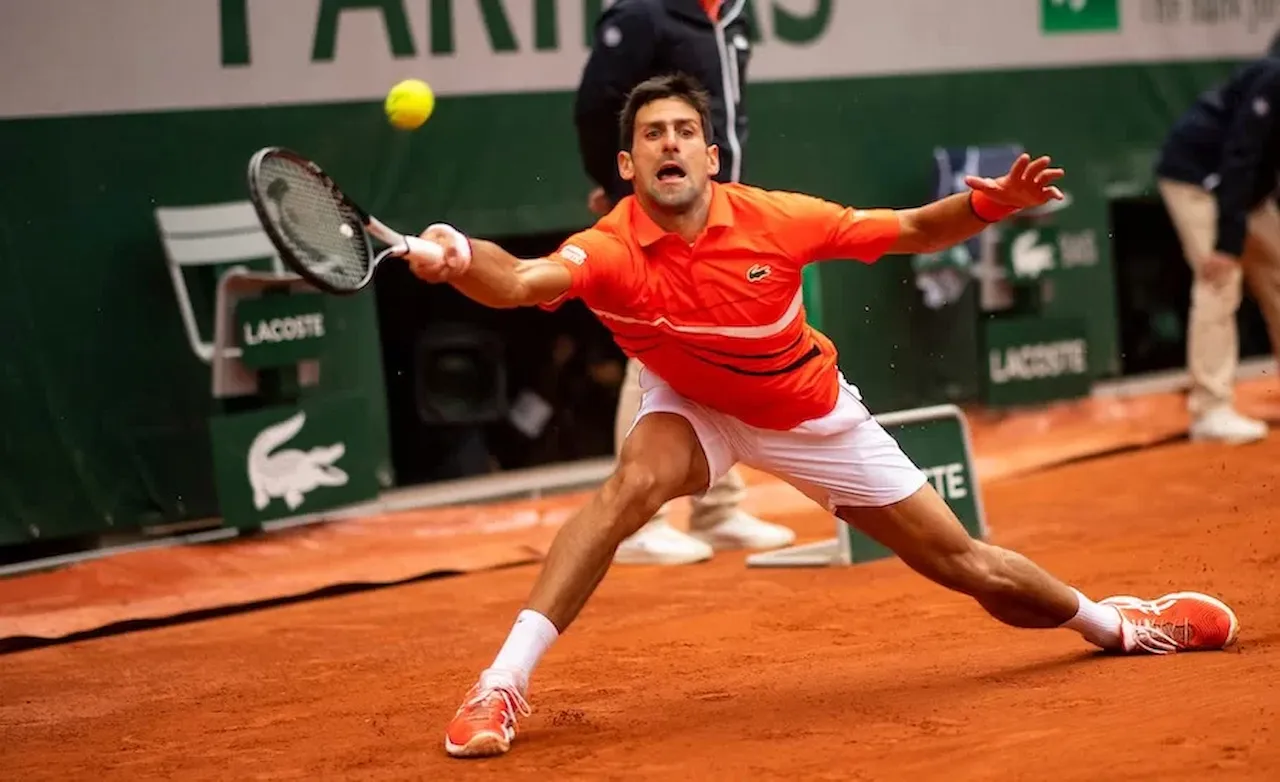
On his least preferred surface, clay, Novak rallied from the brink of defeat to secure the championship, even overcoming renowned players such as Rafael Nadal. Observing his setbacks and subsequent recoveries motivated countless individuals to embrace their own flaws and persist—not because they are flawless, but because they are determined not to surrender.
Mindfulness and Psychological Resilience
Djokovic frequently states, “My greatest adversary is myself.” That statement accurately reflects his perspective. In sports and in life, he challenges not others as much as he confronts the boundaries within himself.
The 2019 Wimbledon final demonstrated this particular mindset. He confronted Roger Federer in front of an audience that wanted Federer to win. However, Djokovic maintained his composure. He saved match points, maintained his composure, and ultimately triumphed in one of the most remarkable matches in tennis history.
When spectators observe him inhale deeply before serving, it is not merely a habitual action — it exemplifies meditation in motion. He employs mindfulness techniques to recalibrate his concentration, much like others might walk or jog to clear their minds.
His example demonstrates that brief periods of tranquility can have a significant impact—whether on a tennis court, in an office, or amid daily life’s tensions.
Confronting Fear and Adversity
Each champion encounters challenges. Djokovic’s most challenging experience occurred in 2021, when his visa was revoked and he was deported from Australia due to vaccination regulations. The entire world observed his public humiliation.
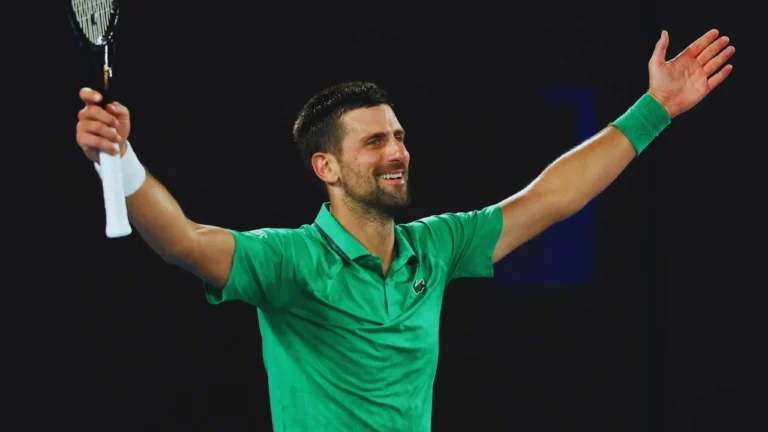
But what action did he take subsequently? He returned after a year, participated in the same tournament, and secured victory once more — this time while injured. That triumph secured his 22nd Grand Slam title, equaling Rafael Nadal’s record.
For Djokovic, the narrative was never centered on demonstrating skeptics were incorrect. It concerned confronting suffering, extending forgiveness to himself, and making another attempt.
His return served as a reminder to all that failure is not the conclusion. It is an integral component of the procedure. Many admirers now draw inspiration from his story to turn their setbacks into catalysts for success—whether they face professional difficulties, health issues, or personal obstacles.
Imperfection Defines Our Humanity
Djokovic is not without flaws. He may become angered, dispute decisions with referees, or even break an instrument when emotions are intense. In 2020, he was disqualified from the U.S. Open following an inadvertent collision with a line judge caused by a ball struck. It was an awkward incident witnessed by millions.
However, after one year, he returned and reached the U.S. Open final once more. This occasion, rather than exhibiting precision, he displayed emotion. During the final match against Daniil Medvedev, Djokovic was visibly moved to tears, overwhelmed by the audience’s support and affection.
That moment transformed many followers’ perception of him. They did not merely perceive a champion — they recognized a fellow human being. A man diligently striving, occasionally encountering setbacks, yet continuing to advance.
From that moment onward, Djokovic emerged as an even more prominent emblem of optimism for individuals grappling with expectations and self-doubt. His narrative serves as a reminder to all that emotion and imperfection do not constitute vulnerabilities. They serve as evidence of our commitment.
Continuous Growth Unceasing
Even after reaching the pinnacle, Djokovic continued to pursue improvement. He consistently seeks growth opportunities—mentally, physically, and emotionally.
In the early 2010s, he modified his diet to improve his energy and concentration. Subsequently, he focused on refining his serve, transforming one of his vulnerabilities into a demonstrated advantage.
At the 2023 ATP Finals, he was defeated by Jannik Sinner in the group stage. Still, he revised his strategy and ultimately defeated Sinner in the final, demonstrating that even minor adjustments can turn defeats into victories.
Supporters frequently regard this as an essential life lesson: it is unnecessary to resolve all issues immediately. Begin with modest steps. Enhance a specific aspect. Continue onward.
Envision It, Visualize It, Accomplish It
Another fundamental aspect of Djokovic’s journey is visualization—envisioning success before its realization. He has frequently stated that he envisions himself raising a trophy well before the final match. This mental visualization reinforces his conviction and enables him to perform with assuredness.
For individuals experiencing self-doubt, this constitutes compelling advice. Visualizing accomplishment enhances confidence and primes the mind for forthcoming challenges. It facilitates the transformation of aspirations into actionable objectives. Whether undertaking marathon training or studying for a significant examination, conviction originates within the mind.
The Personal Dedication of Novak Djokovic
After all these years, Djokovic continues to exhibit humility. Pepe Imaz once stated, “I merely shared the resources that assisted me, and Novak took the initiative.” He characterized Djokovic as notably generous and eager to learn — the type of individual who listens rather than commands.
Now, as Djokovic turns 39, he continues to pursue new milestones. Ranked as the fourth-best player globally, he is currently preparing for another formidable season in 2026. He aspires to maintain good health and to compete against emerging talents such as Carlos Alcaraz and Jannik Sinner. Even after achieving all accomplishments, the fire continues to blaze.
His Social Media Presence and Financial Valuation
Djokovic’s international prominence extends beyond tennis courts. On Instagram, he has amassed more than 13 million followers, frequently sharing training videos, family moments, and motivational messages. Supporters appreciate his genuineness — at times lighthearted, at times contemplative, but consistently authentic.
On Twitter (X) and Facebook, he continues to engage with supporters through tournament updates, philanthropic activities, and personal insights. His communications frequently emphasize compassion, appreciation, and resilience.
As of 2026, Novak Djokovic’s net worth is projected to be approximately $240 million. His income derives from prize money, commercial endorsements, and entrepreneurial pursuits. However, his true prosperity resides in his narrative—one of bravery, setbacks, resilience, and continuous development.
Concluding Remarks
Novak Djokovic is more than merely a tennis icon. He exemplifies resilience, self-awareness, and the strength of the human spirit. His journey demonstrates that greatness does not equate to perfection—it involves continuous learning, adaptation, and maintaining kindness toward oneself throughout the process.
Whether he is securing Grand Slam titles or encountering criticism, Djokovic remains a source of inspiration for millions. He reminds us that genuine champions do not evade their imperfections. They accept them, gain insights from them, and continue progressing.
As a new tennis season commences, one fact remains clear — Novak Djokovic’s journey is far from complete. And the world will observe not only his triumphs but also the insights he consistently imparts—both on and off the court.